
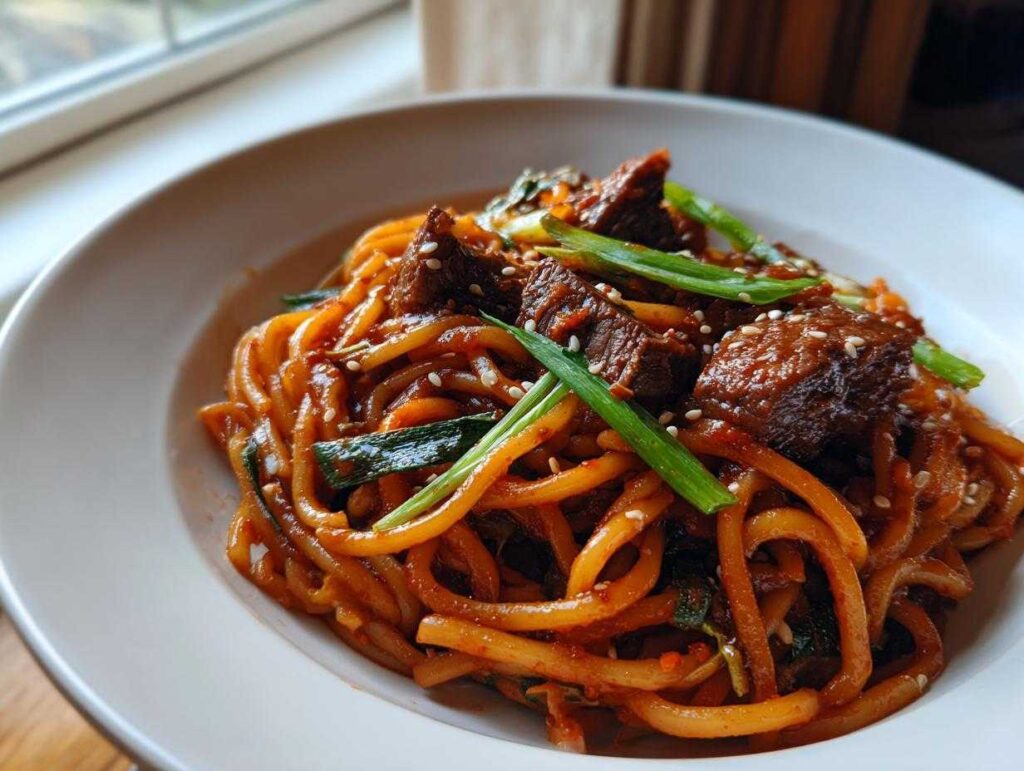
Oh hey there! If you’re anything like me, you feel that constant pull between wanting an incredibly flavorful, restaurant-quality dinner and needing something on the table in under an hour. Well, I’ve cracked the code for those busy weeknights! Today, we’re diving headfirst into a dish that has become my absolute go-to: the best **korean beef noodles** you’ll ever whip up at home. My culinary inspiration always comes straight from my grandmother’s kitchen, where we learned that good food doesn’t need complicated steps, just the right love and ingredients. This quick and spicy stir-fry bridges that gap perfectly. Forget takeout; this recipe delivers big, bold Asian flavors that will make your midweek meal feel like a feast. Trust me, this is the savory Korean beef noodle dish you’ve been searching for!
- Why This Quick Korean Beef Noodles Stir Fry is a Weeknight Hero
- Gathering Your Ingredients for Savory Korean Beef Noodles
- Step-by-Step Instructions: How to Make Korean Beef Noodles
- Ingredient Notes and Substitutions for Your Korean Beef Noodles
- Tips for Perfecting Your Homemade Korean Beef Noodles
- Serving Suggestions for this Spicy Korean Noodles with Beef
- Storing Leftovers of Your Delicious Korean Beef Noodles
- Frequently Asked Questions About Making Korean Beef Noodles
- Share Your Experience Making This Easy Korean Beef Noodles Recipe
Why This Quick Korean Beef Noodles Stir Fry is a Weeknight Hero
I know you have a million things to do after work, so I designed this recipe to be genuinely fast. When I need that authentic kick, this stir fry delivers without stressing me out. It’s all about maximizing flavor with minimal fuss, which is why it’s one of my favorites for getting dinner on the table fast.
- It’s ready in about 35 minutes total—seriously!
- That vibrant, smoky heat from the Gochujang means zero bland leftovers.
- Because it’s a stir fry, cleanup is almost instantaneous. Score!
Gathering Your Ingredients for Savory Korean Beef Noodles
Okay, before we get cooking, let’s talk about what makes these **korean beef noodles** sing. Unlike some overly sweet Asian noodle dishes, ours gets that deep, complex savoriness from a few powerhouse components. My tip? Always slice your beef thinly *against* the grain; this ensures it stays tender even when you’re stir-frying it quickly over high heat. And if you’re looking for other incredible sauces, I always keep my recipe for quick teriyaki handy!
The true star, though, is the Gochujang. This fermented chili paste brings the heat and the funk that screams ‘Korean street food noodles beef!’ Don’t skip it, but remember, a little goes a long way. Here is everything you’ll need for four hearty servings:
- 1 pound sirloin steak, thinly sliced
- 1 pound thick wheat noodles (udon or similar)
- 2 tablespoons soy sauce
- 1 tablespoon sesame oil
- 1 teaspoon black pepper
- 1 tablespoon vegetable oil
- 1 medium yellow onion, sliced
- 2 cloves garlic, minced
- 1 cup sliced carrots
- 1 cup sliced mushrooms
- 1/4 cup gochujang (Korean chili paste)
- 2 tablespoons soy sauce
- 1 tablespoon brown sugar
- 1 tablespoon rice vinegar
- 1 teaspoon grated fresh ginger
- 1/4 cup water
- 2 scallions, chopped (for garnish)
- 1 teaspoon sesame seeds (for garnish)
Step-by-Step Instructions: How to Make Korean Beef Noodles
Alright, this is where the magic happens! We are moving fast here, so make sure your veggies are chopped and your sauce is ready to go before you even look at the stove. Getting that high heat going is key to developing an incredible sear on the beef, which builds flavor for the whole dish. If you’ve ever made a one-pan chicken and broccoli, you know the drill—layering ingredients builds depth!
Marinating the Beef for the Best Korean Beef Noodles Flavor
First things first: we need to bless that beef! Toss your thinly sliced sirloin with those initial seasonings—soy sauce, sesame oil, and pepper. Setting it aside for just those 10 minutes is crucial. It lets the meat soak up just enough flavor to prevent it from tasting flat later on. It’s a quick marination, but trust me, it makes a difference in these **korean beef noodles**.
Cooking Noodles and Preparing the Gochujang Sauce for Korean Beef Noodles
Next, get those thick noodles going according to the package. Once they are done, drain them and give them a quick run under cool water. This stops them from cooking further and stops them from turning into one giant sticky clump! While those boil, whisk together your sauce ingredients: that Gochujang, brown sugar, vinegar, and water. Make sure that Gochujang is fully incorporated so you don’t end up with chunks!
Stir-Frying the Beef and Vegetables for Your Quick Korean Beef Noodles Stir Fry
Time for the wok! Heat up your vegetable oil until it’s shimmering hot. Throw in the beef and don’t overcrowd the pan—that’s how you get a sear instead of steaming it! Cook it quick, just until it browns nicely, maybe 3 or 4 minutes, and then scoop it out. Then, throw in your onions, garlic, carrots, and mushrooms. You want those veggies tender-crisp, not soggy. This high-heat technique is what separates a good **quick korean beef noodles stir fry** from a great one.
Combining Everything for the Final Korean Beef Noodles Dish
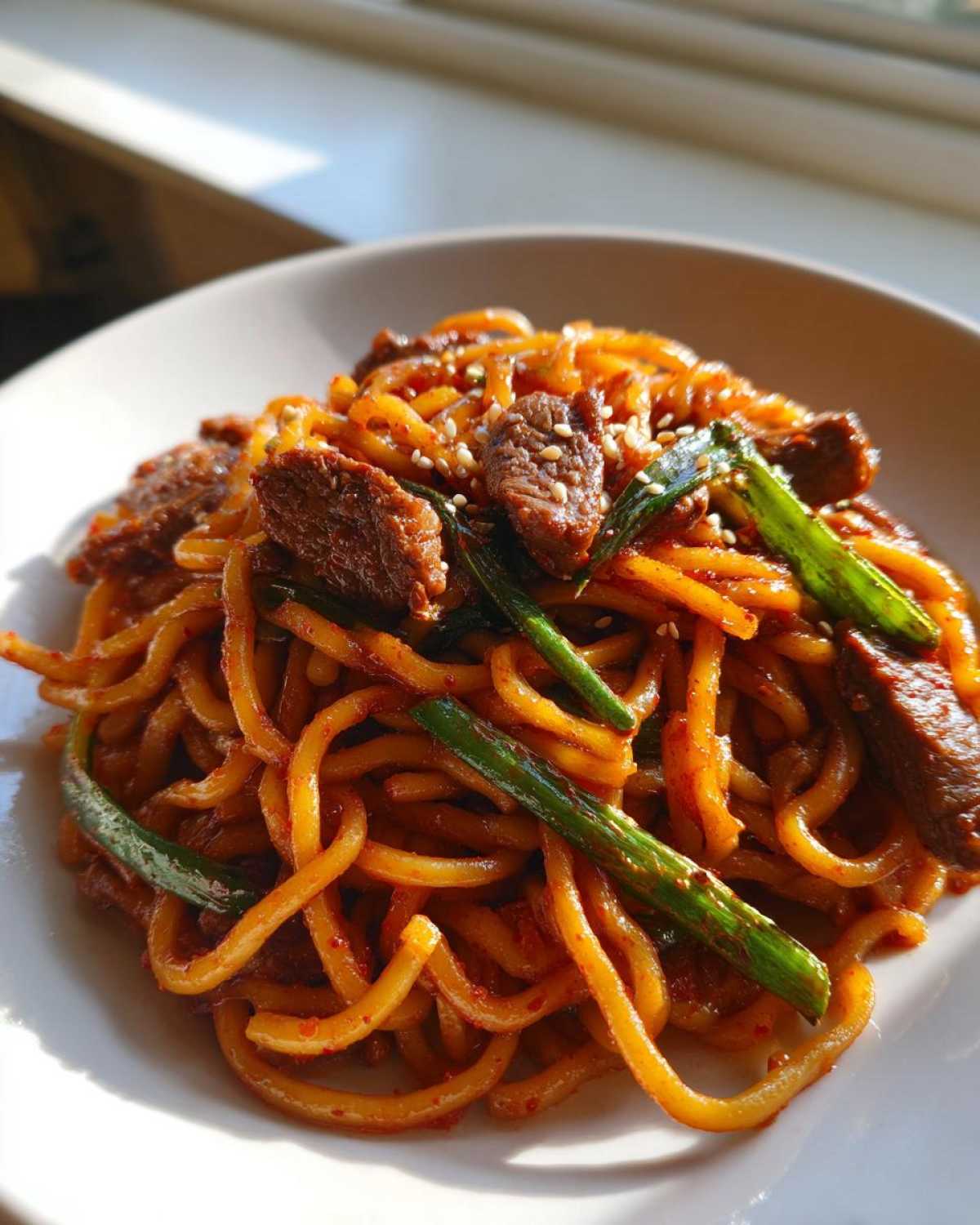
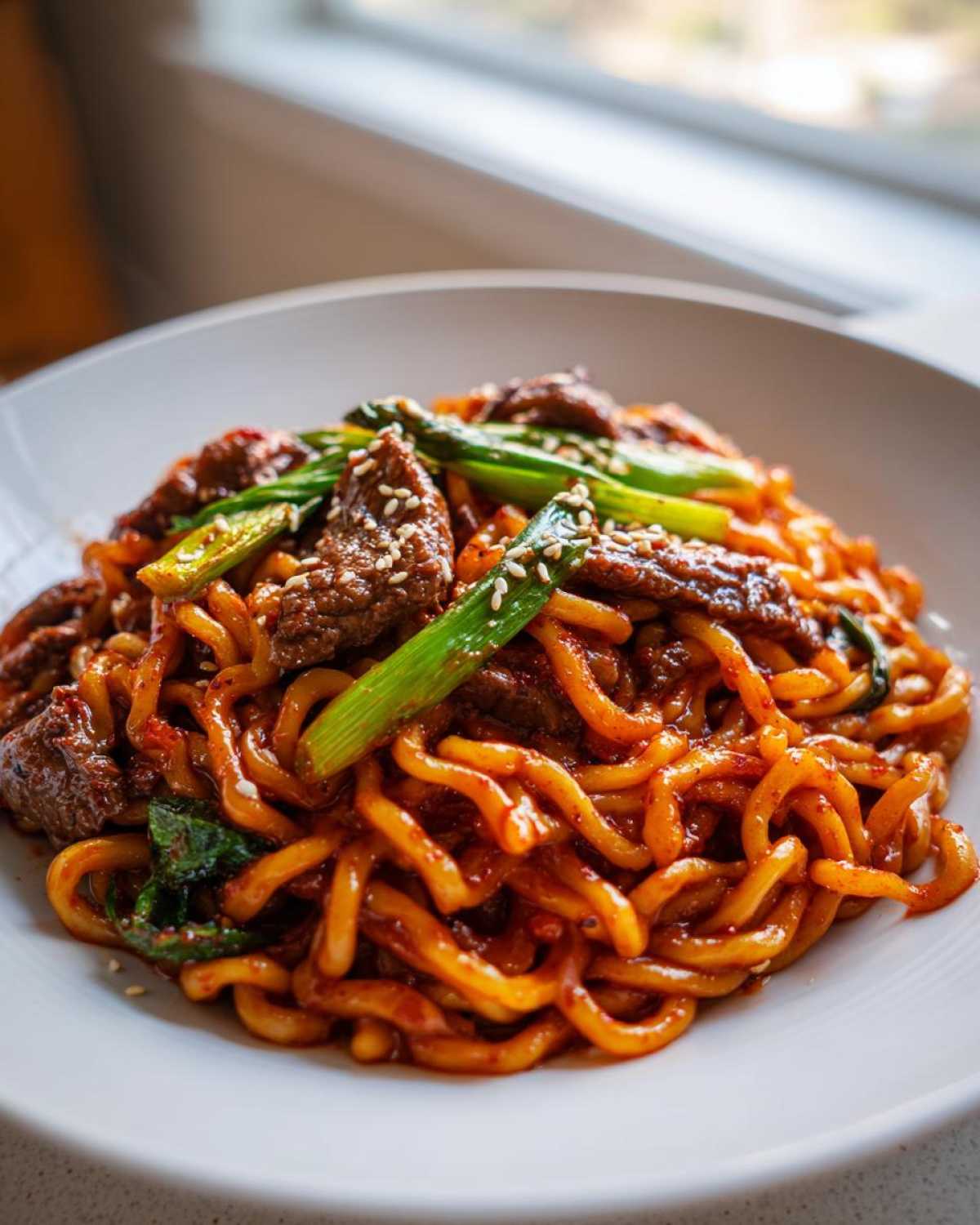
Now, bring everything back home! Pop that gorgeous, seared beef back into the pan with the vegetables. Add in your cooked and separated noodles. Pour that spicy Gochujang sauce right over the top. Toss everything together vigorously for about two minutes until every strand of noodle and every piece of beef is coated in that magnificent red sauce. Make sure it’s all heated through, and then get it straight onto plates!
Ingredient Notes and Substitutions for Your Korean Beef Noodles
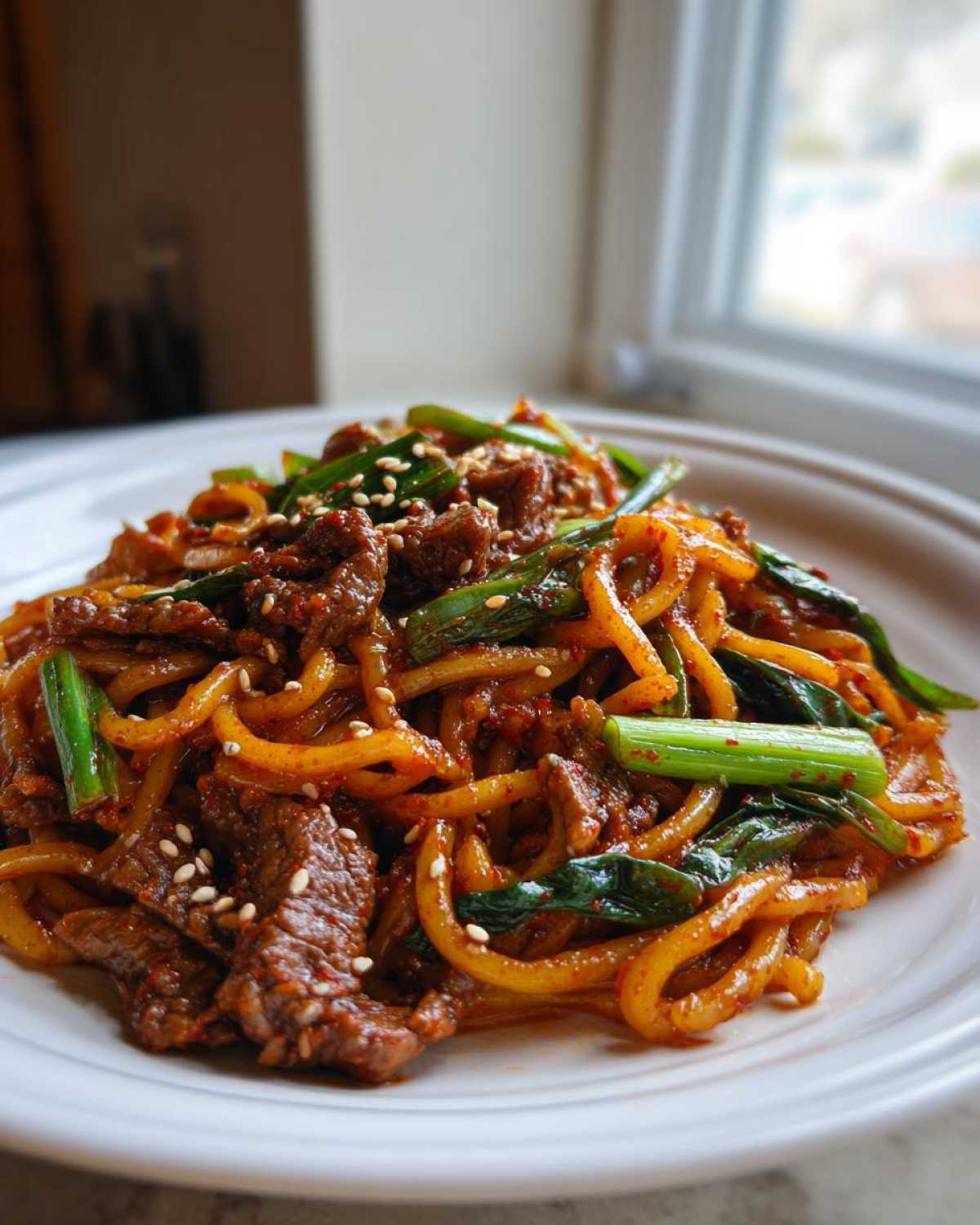
I get so many questions about swaps, especially when it comes to making sure we have the right texture for our **korean beef noodles**! Sirloin is my favorite because it’s lean and tender, but don’t stress if you only have flank steak or even skirt steak on hand, just make sure you slice it super thin against the grain like I mentioned before. For those of you trying to avoid red meat, thinly sliced pork shoulder works like a dream here, too. It just takes a little longer to cook through, so keep an eye on it!
If you’re looking for more vegetable inspiration, try adding some bell peppers or snap peas when you toss in the carrots. We don’t want to change the core flavor profile too much, but a little extra crunch is always welcome. For more stir-fry ideas using different proteins, check out my chicken and zucchini stir-fry!
Noodle Variations: Beyond Wheat Noodles in Korean Beef Noodles
If you are hunting for that true chewy texture often seen in Korean dishes, definitely try using sweet potato starch noodles, which are often called glass noodles or *dangmyeon*. If you switch to the glass noodles beef stir fry recipe style, remember they need to be soaked before boiling according to their package!
Tips for Perfecting Your Homemade Korean Beef Noodles
Okay, now that you know the basic steps for our **easy korean beef noodles recipe**, let’s talk about making them next-level amazing. This is where you shift from just following instructions to truly cooking with instinct! Achieving that perfect sear on the beef is non-negotiable for me; it builds foundational flavor you can’t get any other way. Make absolutely sure your skillet is ripping hot before that beef hits the oil. If it sizzles aggressively immediately, you’re golden!
My biggest pro-tip involves tweaking that sauce balance. Taste it before you toss it with the noodles. If it screams too much of that lovely Gochujang heat, swirl in just a touch more brown sugar or a tiny splash of water to smooth it out. If it tastes flat, a small pinch of salt or a drop of extra rice vinegar tightens everything right up. When I make my steak marinades, like this skirt steak marinade recipe, I always taste the marinade before adding the meat. Treat this sauce the same way!
Serving Suggestions for this Spicy Korean Noodles with Beef
Once you pull these **spicy korean noodles with beef** off the heat, you’ll want to serve them immediately while they are piping hot and glossy! The intense flavor of the Gochujang sauce is fantastic on its own, but pairing it with something cool and crisp on the side just elevates the entire experience. A simple, quick cucumber salad or some tangy kimchi works wonders to cut through the richness.
Don’t forget those final touches we mentioned! A generous sprinkle of fresh green scallions and those nutty sesame seeds brings texture and aroma right before you dig in. If you need a really simple side sauce for leftovers, always check out my recipe for homemade tartar sauce—I know, totally random, but some people love dipping steak bites in creamy sauces!
Storing Leftovers of Your Delicious Korean Beef Noodles
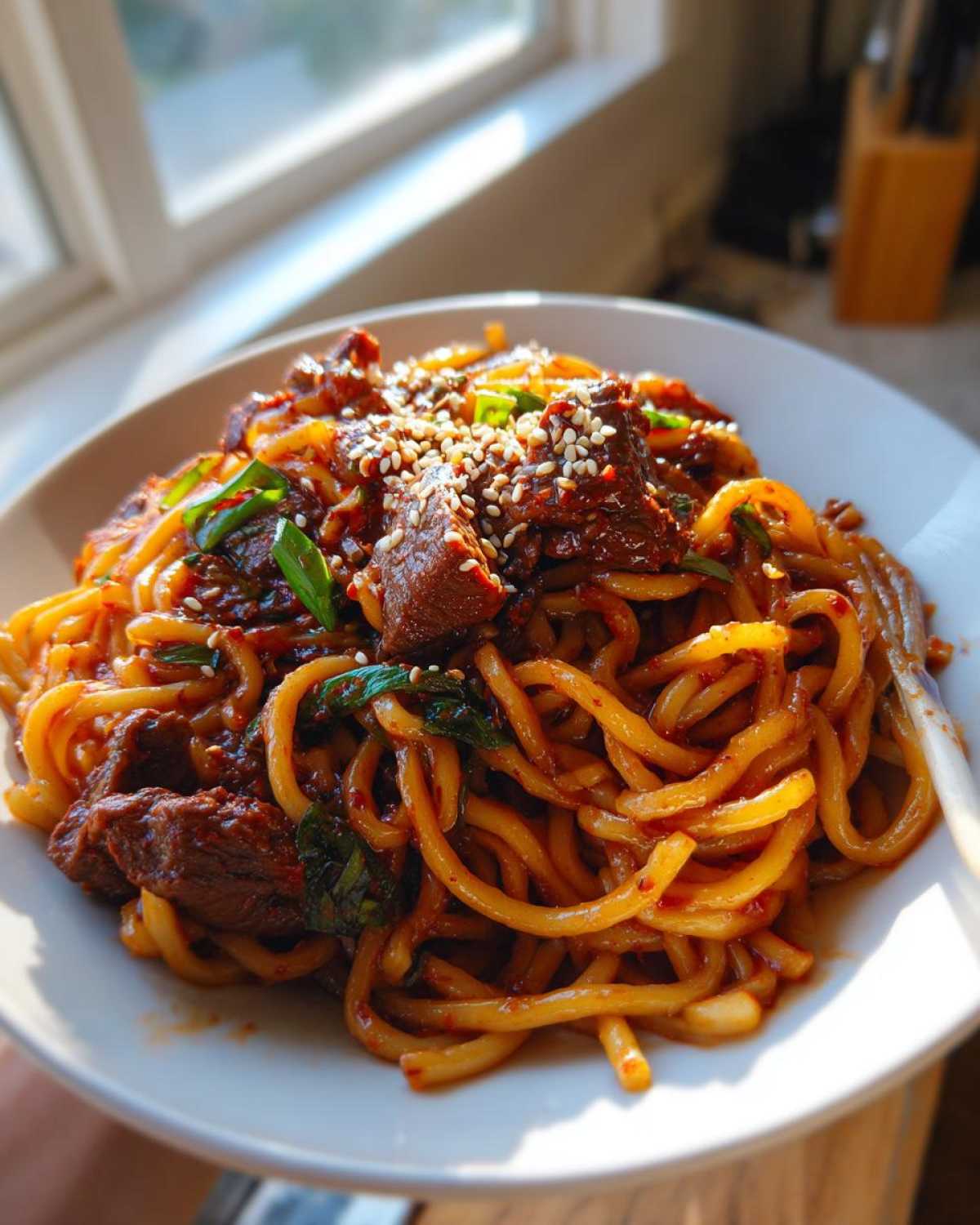
The best part about these **korean beef noodles** is that they taste almost as good the next day—if you store them right! Pop any leftovers into a truly airtight container right after they cool down a bit. Keep them chilled, and honestly, they should be great for about three days.
Reheating is the tricky part. I really try to avoid the microwave because it can make the noodles gummy. If you must use a microwave, use short 30-second bursts, stirring in between. My secret for bringing them back to life? Toss them in a hot skillet with just a splash of water or stock. This brings back that lovely saucy texture your **weeknight korean beef noodles** had the first time around!
Frequently Asked Questions About Making Korean Beef Noodles
I know you’ve got questions simmering away, and that’s totally normal when trying a new recipe! Whether you’re trying to manage the heat or swap out ingredients, I’ve got the inside scoop on making these **korean beef noodles** work perfectly for you. If you’re also looking for simple ways to cook perfect beef, my easy garlic steak bites recipe is a great companion to this post!
Can I use Bulgogi marinade instead of the Gochujang sauce for these Korean Beef Noodles?
You definitely can! If you use a traditional Bulgogi marinade, you’ll get a fantastic result, just know it leans sweeter and much less spicy. So, while it’s a wonderful **bulgogi beef noodles recipe**, it won’t quite hit that target of **spicy korean noodles with beef** that we aimed for here.
Is there a way to make this an authentic Korean beef noodle soup?
That’s a great thought! This recipe is specifically designed as a thick stir-fry where the sauce lightly coats everything—it’s more in the style of a **quick korean beef noodles stir fry**. If you want a soup, you’d need much more liquid. You could try returning the noodles and beef back into the pan and adding about 2 cups of beef broth, letting it simmer briefly, but it won’t be an **authentic korean beef noodle soup**; it’ll be closer to a saucy noodle bowl!
What if I absolutely hate spicy food?
No worries at all! Gochujang is incredibly flavorful, but it brings the heat. If you’re sensitive, start with just one tablespoon instead of the quarter cup. You can also substitute it with a mixture of ketchup, brown sugar, and a tiny pinch of chili powder—it won’t taste exactly the same, but it keeps the sticky, savory base for your **simple korean beef and noodle recipe**!
Can I make this recipe vegetarian or vegan?
Since the keyword is **korean beef noodles**, the beef is central, but absolutely! Tofu that has been pressed and either baked or pan-fried until crispy works wonderfully here. Either use a vegan alternative for the sauce bases (like using maple syrup instead of brown sugar) or just skip the beef entirely and load up on extra hearty vegetables like broccoli florets or bok choy.
Share Your Experience Making This Easy Korean Beef Noodles Recipe
I just absolutely love knowing when you all are cooking along with me! Please come back, leave a rating, and tell me in the comments how your **easy korean beef noodles recipe** turned out! If you snapped a gorgeous, glossy photo of your dinner, I’d love to see it! Remember, you can find more fun cooking adventures and inspiration over on Pinterest—just look up Kitchen User! If you enjoyed tweaking this one, you might also adore my easy tamale pie for next week! Find more inspiration over at our Pinterest page!
PrintQuick and Spicy Korean Beef Noodles Stir-Fry
Make this easy Korean beef noodles stir-fry tonight! This recipe uses a savory gochujang sauce to coat tender beef and chewy noodles for a fast, flavorful weeknight meal.
- Prep Time: 15 min
- Cook Time: 20 min
- Total Time: 35 min
- Yield: 4 servings 1x
- Category: Dinner
- Method: Stir-Frying
- Cuisine: Korean
- Diet: Vegetarian
Ingredients
- 1 pound sirloin steak, thinly sliced
- 1 pound thick wheat noodles (udon or similar)
- 2 tablespoons soy sauce
- 1 tablespoon sesame oil
- 1 teaspoon black pepper
- 1 tablespoon vegetable oil
- 1 medium yellow onion, sliced
- 2 cloves garlic, minced
- 1 cup sliced carrots
- 1 cup sliced mushrooms
- 1/4 cup gochujang (Korean chili paste)
- 2 tablespoons soy sauce
- 1 tablespoon brown sugar
- 1 tablespoon rice vinegar
- 1 teaspoon grated fresh ginger
- 1/4 cup water
- 2 scallions, chopped (for garnish)
- 1 teaspoon sesame seeds (for garnish)
Instructions
- In a bowl, toss the sliced beef with 2 tablespoons soy sauce, sesame oil, and black pepper. Set aside for 10 minutes.
- Cook the noodles according to package directions. Drain them and rinse briefly with cold water to stop cooking. Toss with a little oil to prevent sticking.
- While the noodles cook, prepare the sauce: Whisk together gochujang, 2 tablespoons soy sauce, brown sugar, rice vinegar, ginger, and water in a small bowl.
- Heat the vegetable oil in a large skillet or wok over medium-high heat. Add the beef and stir-fry until browned, about 3-4 minutes. Remove the beef and set it aside.
- Add the onion, garlic, carrots, and mushrooms to the same skillet. Stir-fry until the vegetables are tender-crisp, about 5 minutes.
- Return the cooked beef to the skillet. Add the cooked noodles.
- Pour the prepared gochujang sauce over the noodles and beef. Toss everything together quickly until the noodles are evenly coated and heated through, about 2 minutes.
- Serve immediately. Garnish your savory Korean beef noodle dish with chopped scallions and sesame seeds.
Notes
- For a milder flavor, reduce the gochujang to 2 tablespoons.
- If you prefer glass noodles beef stir fry, substitute sweet potato starch noodles (dangmyeon) for the wheat noodles; adjust cooking time as needed.
- You can substitute thinly sliced pork shoulder for the beef if desired.
- Follow Kitchen User for more weeknight korean beef noodles ideas.
Nutrition
- Serving Size: 1 serving
- Calories: 580
- Sugar: 12
- Sodium: 850
- Fat: 18
- Saturated Fat: 5
- Unsaturated Fat: 13
- Trans Fat: 0
- Carbohydrates: 75
- Fiber: 5
- Protein: 35
- Cholesterol: 70