
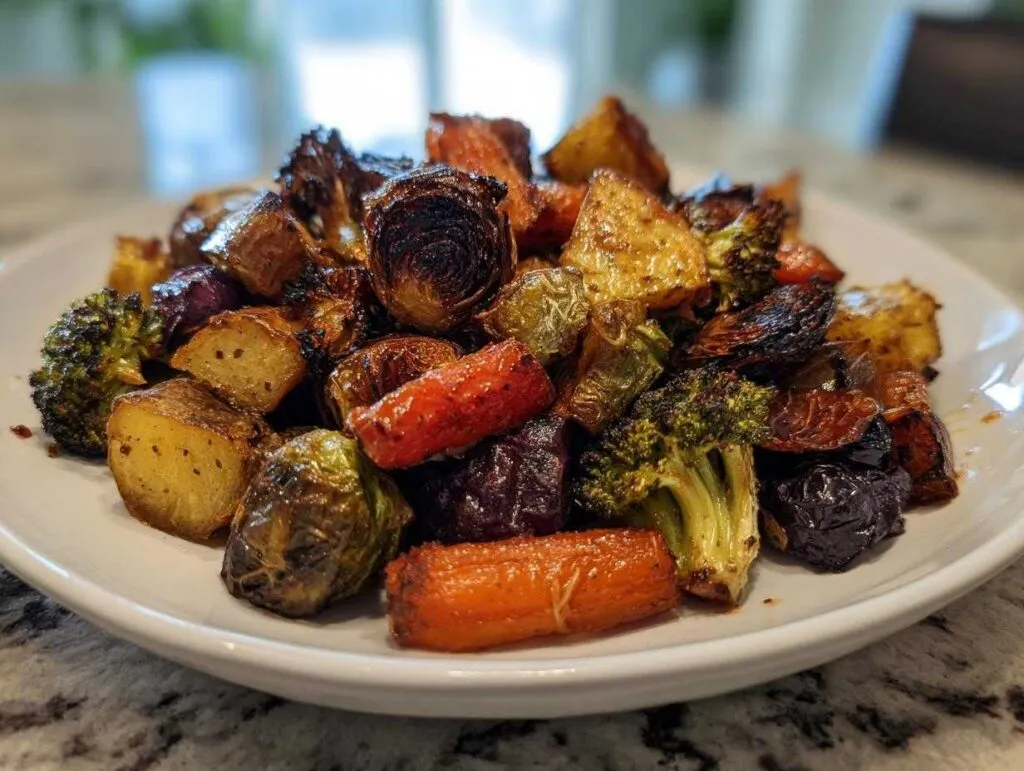
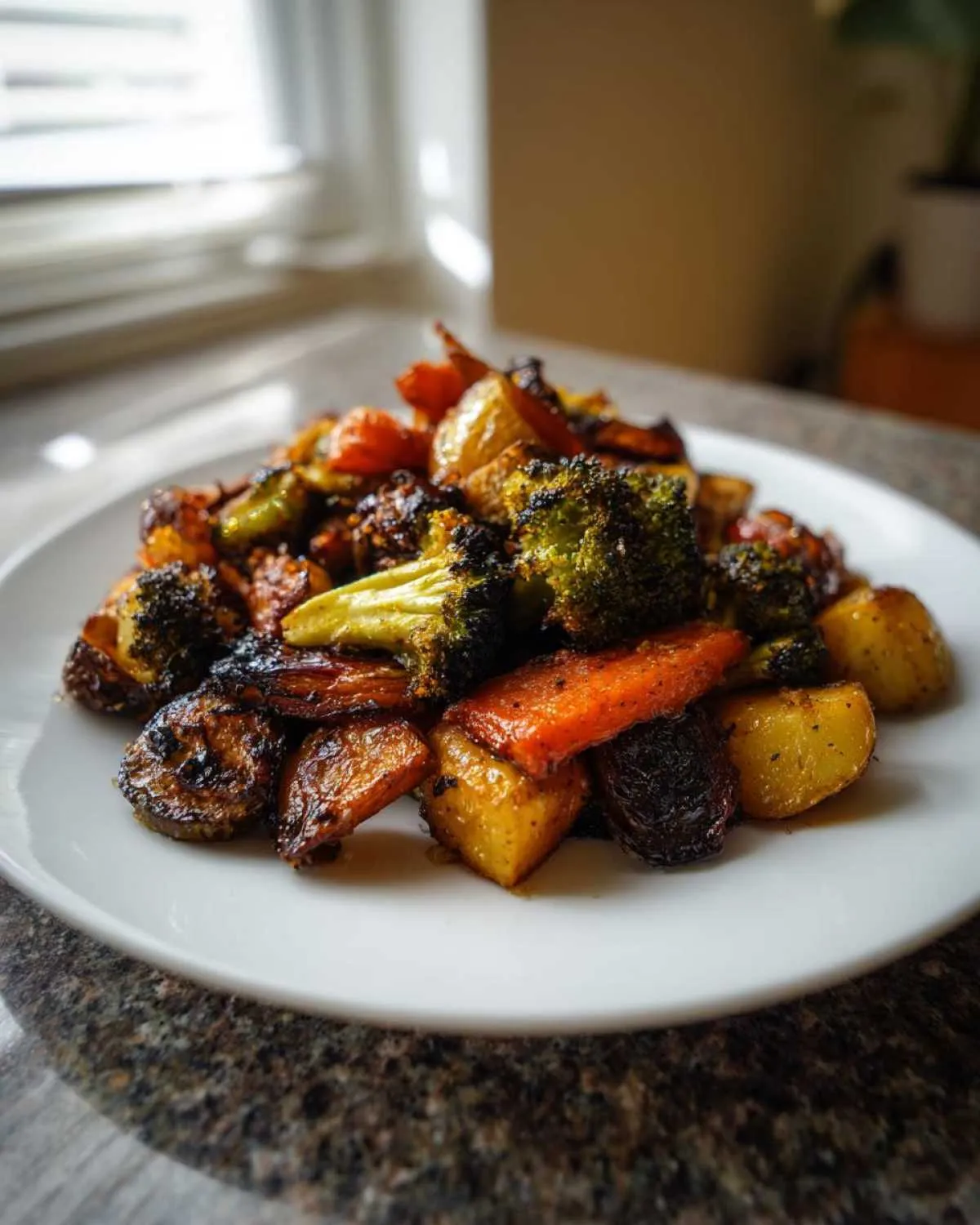
Oh, my kitchen friends, are you tired of vegetables that come out of the oven looking sad, steamed, and just plain *blah*? I used to be right there with you! But mastering the art of roasting changed everything in my cooking game. Seriously, learning this technique transformed my side dishes from afterthoughts into the stars of the plate. This isn’t just another recipe; this is The Ultimate Guide to Perfectly Roasted Vegetables—where we focus on getting those gorgeous, deep brown, caramelized edges while keeping the inside tender and sweet. Get ready, because after this, your roasted vegetables will be the best side dish you’ve ever served!
- Why You Need This Masterclass for Perfectly Roasted Vegetables
- Essential Ingredients for Flavorful Roasted Vegetables
- The Ultimate Oven Roasting Guide: How to Roast Vegetables
- Flavor Variations for Your Roasted Vegetables Recipe
- Tips for Success: Achieving Perfectly Roasted Vegetables Every Time
- Customizing Your Vegetable Medley Recipe
- Serving Suggestions for Your Simple Vegetable Side
- Storage and Reheating Instructions for Leftover Roasted Vegetables
- Frequently Asked Questions About Roasted Vegetables
Why You Need This Masterclass for Perfectly Roasted Vegetables
Look, we all want flavor without the fuss, right? This technique is my go-to when I need something healthy, quick, and unbelievably tasty on the table.
- Say goodbye to mushy textures forever!
- Get maximum caramelization with minimal effort.
- It’s my secret weapon for the best vegetable side dish for busy weeknights.
- It’s the simplest path to flavourful, vibrant roasted vegetables.
Essential Ingredients for Flavorful Roasted Vegetables
So, the base recipe is super simple, but precision here is crucial—it’s the foundation for real flavor! You’ll want about three pounds of seasonal veggies, like broccoli or carrots, cut into perfect, uniform 1-inch pieces. Remember, they all need to look like buddies so they cook evenly. Then, you absolutely need about three tablespoons of good olive oil—don’t skimp here! We finish the basic seasoning with salt, pepper, garlic powder, and just a hint of dried herbs. If you love garlic, check out my garlic herb roast for an extra boost!
The Ultimate Oven Roasting Guide: How to Roast Vegetables
Okay, this is where the magic happens, friends. Getting that restaurant-quality texture on your roasted potatoes or any vegetable medley recipe is all about technique, not luck! We need high heat to shock those veggies into crispiness, and we need them coated just right. Trust me, following these exact steps is the difference between sad, steamed veggies and unbelievably tasty vegetable preparation that everyone fights over!
Preheating and Cutting for Uniform Roasted Vegetables
First things first: crank that oven up! We are going to 425°F (or 220°C). High heat is non-negotiable if you want those lovely brown spots. Next, look closely at your cutting board. Every piece—whether it’s a chunk of sweet potato or a floret of broccoli—needs to be roughly the same size. If you have tiny bits next to massive chunks, the small ones turn to dust while the big ones are still tough. Precision here equals perfectly cooked roasted vegetables!
The Secret to Crispy Roasted Vegetables: Drying and Spacing
Here’s tip number one that people always forget: aggressively dry your vegetables with paper towels before they even see the oil. Water turns to steam in the oven, and steam makes things soggy! Once they are dry, get them onto a large baking sheet. And I mean *large*. You must spread them out in a single layer; they need elbow room! If you pile them up, they steam, and you lose all that beautiful opportunity for caramelized vegetables development. Give them space!
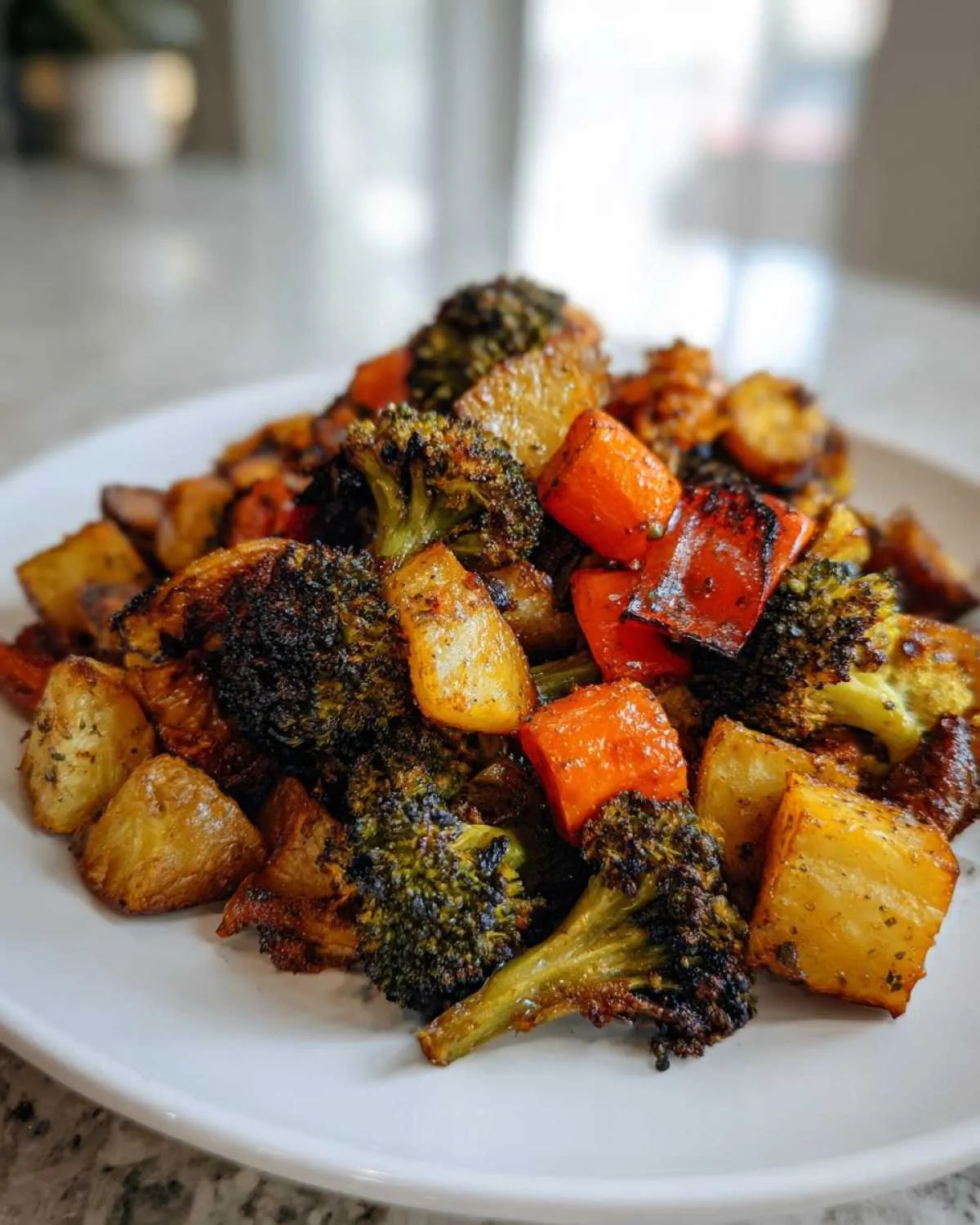
Flavor Variations for Your Roasted Vegetables Recipe
Once you nail the basic technique, the true fun begins: customizing! That base recipe—oil, salt, pepper, garlic powder for that lovely foundation—is just the jumping-off point. I love changing things up depending on what main course I’m serving, or honestly, just whatever mood I’m in that night. You can explore so many directions when you know the roasting rules are already locked down. These two flavor bombs are my absolute favorites to transform simple roasted vegetables into something truly special!
Garlic Roasted Vegetables: Adding Fresh Aromatics
If you are making my favorite basic seasoning mix, you already have garlic powder in there, which is great for the initial high heat. But if you want that pungent, real garlic punch, you have to go fresh! Add about a tablespoon of minced fresh garlic during the *last five minutes* of cooking. If you add it at the start with the oil, it burns up and tastes bitter, which ruins the whole batch! This trick gives you intense, aromatic garlic roasted vegetables.
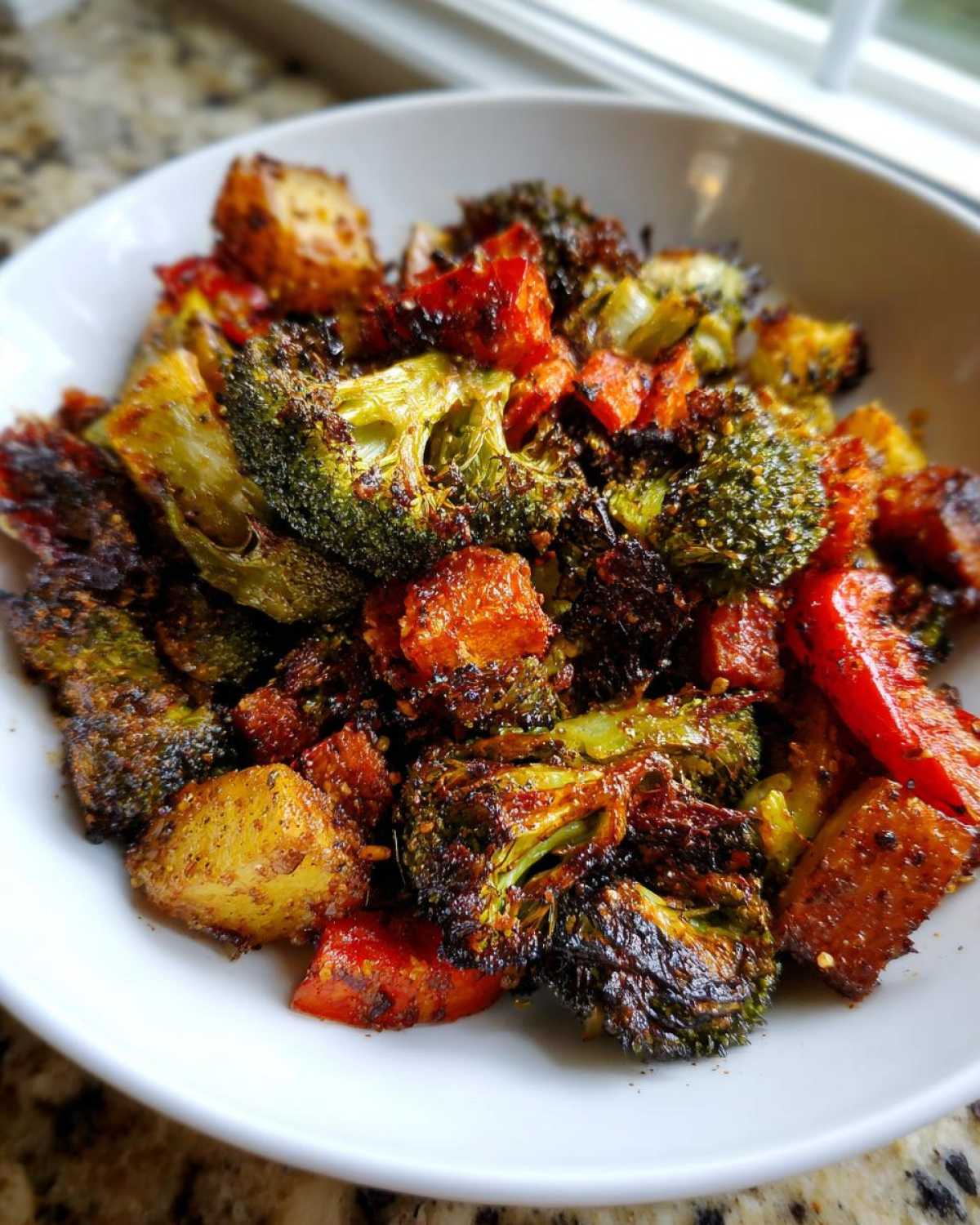
Sweet & Savory Glaze for Caramelized Vegetables
This is my secret weapon when I want the veggies to look shiny and taste slightly complex—perfect next to roasted chicken or pork chops, like my lemon herb chicken. Just whisk together one tablespoon of maple syrup and one teaspoon of Dijon mustard. Drizzle this mixture over the hot vegetables right after that first 20-minute roast, toss them gently, and send them back in. That glaze turns into gorgeous, sticky, caramelized vegetables!
Tips for Success: Achieving Perfectly Roasted Vegetables Every Time
I have a confession: early on, I used to try roasting a giant pile of vegetables on one small baking sheet. You know what happened? Steam bath! Soggy disasters that tasted like boiled vegetables dressed in oil. Don’t make my rookie mistake! The absolute key to those coveted crispy roasted vegetables is surface area. You need a rimmed baking sheet—or two—so the vegetables are in a true single layer. They need air circulation to crisp up instead of overlapping and trapping moisture.
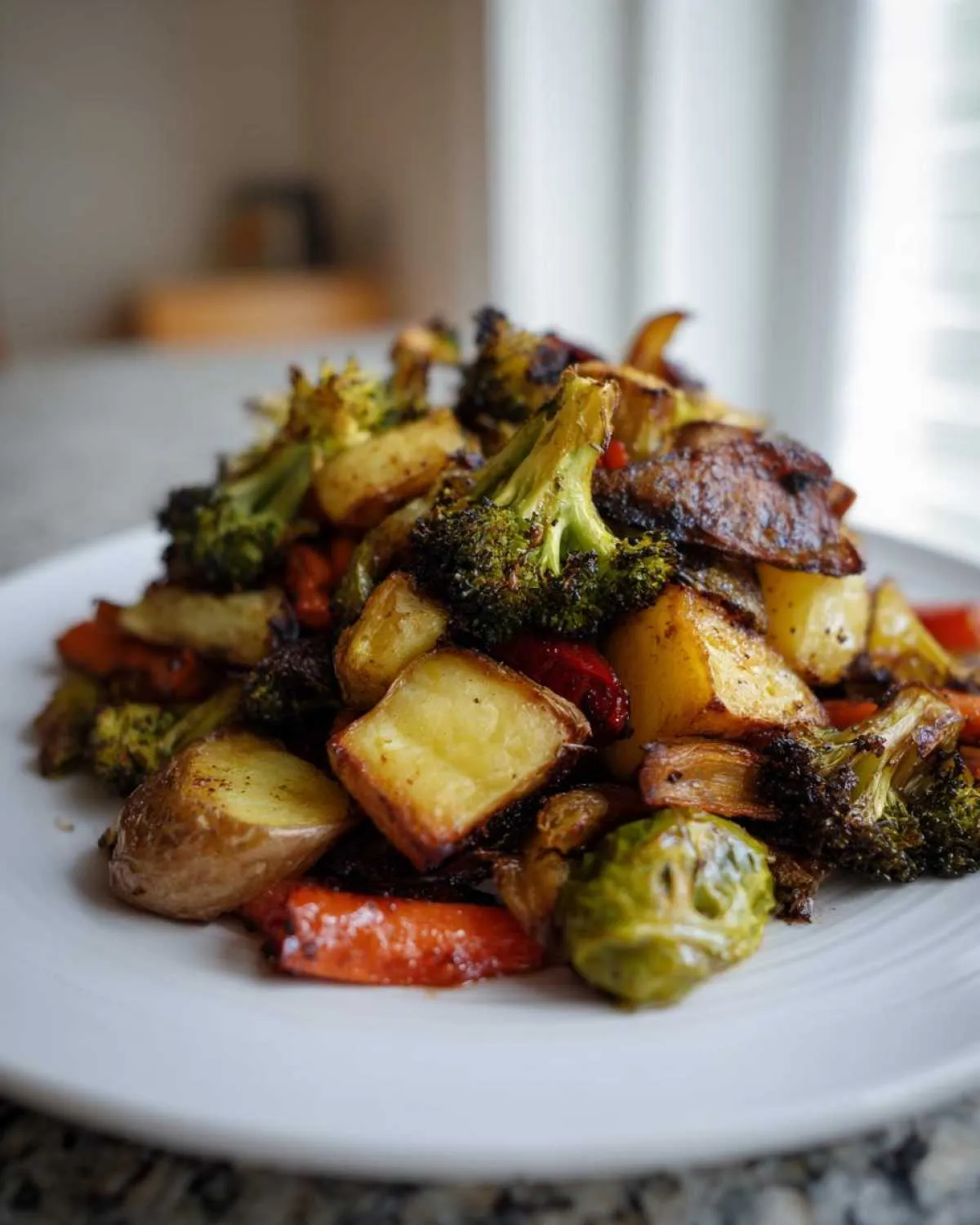
Also, remember that little bit of maple glaze instruction earlier? Do not add that glaze too soon. If you put sticky things like honey or maple syrup on too early, they burn before the vegetable even gets tender. A quick toss in the final minutes is all you need to get that beautiful, slightly shiny finish. Pay attention to the timing, and you’ll stop feeling like you’re just hoping for the best and start knowing you’ve nailed the ultimate technique!
Customizing Your Vegetable Medley Recipe
One of the things I adore most about making roasted vegetables is that it’s totally flexible! You aren’t locked into one combination, which makes it perfect for using up what’s best in the market right now. When the weather gets cooler, I lean heavily into the root vegetables—think potatoes, sweet potatoes (my honey cinnamon crispy ones are amazing!), turnips, and parsnips. Those need a little extra time, so I might cut them bigger.
But when summer rolls around? Oh boy, it’s time for things that cook slightly faster—zucchini, bell peppers, onion wedges, and maybe some eggplant. For the summer batch, I toss them right into the oven after the initial 15 minutes with the harder veggies, or spread them out on a second pan to ensure they don’t steam. This seasonal rotation means you get the best flavor profile year-round!
Serving Suggestions for Your Simple Vegetable Side
Now that you have mastered the technique for perfectly caramelized, flavorful roasted vegetables, what do you serve them with? Honestly, they are so good, they can stand alone as a healthy snack! But traditionally, they shine next to just about anything. They are wonderful alongside simple baked fish, perfectly grilled steak, or even something flavorful like my lemon butter chicken. Because they are so hearty and hold their shape well, they also travel like a dream, making them a dependable star side dish for any potluck or holiday dinner!
Storage and Reheating Instructions for Leftover Roasted Vegetables
First off, if you have leftovers—which usually doesn’t happen in my house—you need to treat them correctly so they don’t turn to mush overnight! Store any remaining goodness in an airtight container in the fridge for up to four days. Now, the reheating part is crucial if you want to bring back that lovely crunch we worked so hard for.
Please, avoid the microwave if you can; it makes everything limp! For the best roasted vegetables texture on day two, toss them back onto a baking sheet and reheat them in a 400°F oven for about 5 to 7 minutes. If you have an air fryer, that’s even better—it blasts them with direct heat and restores that beautiful crispness in just 3 to 4 minutes. Happy snacking!
Frequently Asked Questions About Roasted Vegetables
I know you might still have a few little things swirling around in your head after diving deep into the world of perfect roasting! It’s okay; mastering any skill takes a little back and forth. I gathered a few questions people often ask when they are trying to nail the best vegetable side dish. If you master these points, you’ll never have a soggy veggie again! Need a quick refresher on the overall process? Check out my how to roast vegetables guide for a fast overview.
Can I use less oil when making roasted vegetables?
That’s a great question, especially if you are trying to keep things light! While you technically can use a little less, I really advise sticking close to the recommended amount. That fat isn’t just for flavor; it’s the medium that transfers the oven’s heat and helps create those gorgeous, non-soggy, caramelized vegetables. Too little oil means they stick or just dry out instead of crisping up!
What is the best temperature for oven roasting guide?
If you want genuinely crispy roasted vegetables, 425°F (or 220°C) is your sweet spot. We need high heat to cook them quickly and evaporate moisture fast enough to encourage browning rather than steaming. It’s the key setting in my whole oven roasting guide!
PrintThe Ultimate Guide to Perfectly Roasted Vegetables: Crispy, Caramelized, and Flavorful
Learn the definitive technique for making perfectly roasted vegetables every time. This guide focuses on achieving crispy edges and tender centers, offering simple seasoning variations for the best vegetable side dish you will ever make.
- Prep Time: 15 min
- Cook Time: 35 min
- Total Time: 50 min
- Yield: 6 servings 1x
- Category: Side Dish
- Method: Oven Roasting
- Cuisine: American
- Diet: Vegan
Ingredients
- 3 lbs mixed seasonal vegetables (e.g., broccoli, carrots, potatoes, bell peppers), cut into uniform 1-inch pieces
- 3 tablespoons olive oil (do not use less)
- 1 teaspoon kosher salt
- 1/2 teaspoon black pepper
- 1 teaspoon garlic powder
- 1/2 teaspoon dried Italian herbs (for basic seasoning)
Instructions
- Preheat your oven to 425°F (220°C). High heat is key for caramelization.
- Prepare your vegetables: Cut all vegetables into pieces roughly the same size. This ensures even cooking. If pieces are too large, they steam; if too small, they burn.
- Dry the vegetables thoroughly using paper towels. Excess moisture causes steaming, leading to soggy results instead of crispy roasted vegetables.
- Place the dried vegetables on a large, rimmed baking sheet. Do not overcrowd the pan; use two sheets if necessary. Vegetables need space to roast, not steam.
- Drizzle the vegetables with the 3 tablespoons of olive oil. Toss them directly on the pan until every piece is lightly coated. This is essential for achieving caramelized vegetables.
- Sprinkle evenly with salt, pepper, garlic powder, and dried herbs. Toss again to distribute the seasoning.
- Roast for 20 minutes.
- Remove the pan from the oven and toss the vegetables to promote even browning.
- Return to the oven and roast for another 10 to 15 minutes, or until the vegetables are tender on the inside and have deep brown, crispy edges.
- Serve immediately as the best vegetable side dish for your main course.
Notes
- For Garlic Roasted Vegetables variation: Add 1 tablespoon of minced fresh garlic during the last 5 minutes of roasting to prevent burning.
- For a Sweet & Savory Glaze: Whisk 1 tablespoon of maple syrup with 1 teaspoon of Dijon mustard. Drizzle over the vegetables during the last 5 minutes of cooking.
- For best results, use a sheet pan that is large enough that the vegetables are in a single layer. This is the secret to crispy roasted vegetables.
- This preparation is naturally vegan and gluten free.
Nutrition
- Serving Size: 1.5 cups
- Calories: 150
- Sugar: 5
- Sodium: 450
- Fat: 8
- Saturated Fat: 1
- Unsaturated Fat: 7
- Trans Fat: 0
- Carbohydrates: 18
- Fiber: 5
- Protein: 3
- Cholesterol: 0